
The Complete Guide to RV Roof Care: Membrane & Fiberglass Roof Maintenance
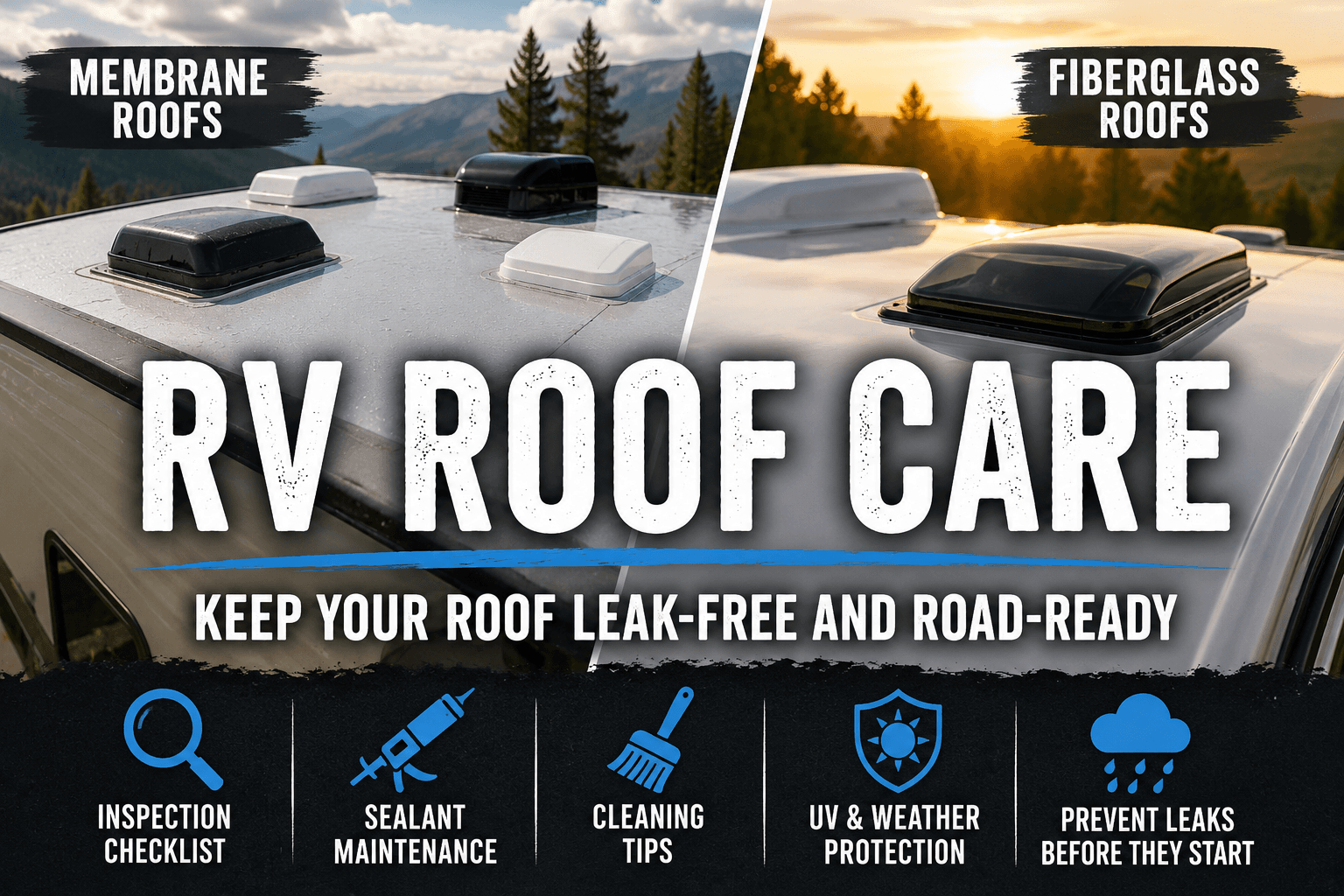
The Complete Guide to RV Roof Care: Membrane & Fiberglass Roof Maintenance
If there's one thing every RV owner should get comfortable doing, it's climbing up on their roof.
It sounds simple, but most roof problems don't happen overnight. They start small. A tiny crack in the sealant, a loose mounting screw, or a neglected seam can eventually turn into water damage that's far more expensive than spending ten minutes doing a quick inspection.
We make it a habit to inspect our roof before every major trip. That routine has already helped us catch issues early and avoid potential leaks.
The good news is that RV roof maintenance isn't difficult once you know what you're looking for.
First Things First: Know What Type of Roof You Have
Most RVs today have one of two roof types:
- Membrane roofs (TPO or EPDM)
- Fiberglass roofs
Both require maintenance, but they're cared for a little differently.
Caring for Membrane Roofs
Membrane roofs are extremely common and can last many years when properly maintained.
During your inspections, look for:
- Cracked or thin sealant
- Tears or punctures in the membrane
- Loose roof accessories
- Lifting roof seams
- Signs of water pooling
- Damage around vents, antennas, and skylights
The most common maintenance item you'll perform is resealing roof penetrations with self-leveling lap sealant.
One small crack can allow water to travel surprisingly far before you ever notice a leak inside.
Caring for Fiberglass Roofs
Fiberglass roofs are durable and easier to clean, but they aren't maintenance-free.
Inspect for:
- Hairline cracks
- Loose sealant
- Faded gel coat
- Soft spots
- Damaged seams and moldings
- Loose roof accessories
Fiberglass roofs don't typically require as much sealant maintenance as membrane roofs, but they're still vulnerable anywhere something penetrates the roof.
Remember, vents don't care what material your roof is made from. They can leak just the same.
How Often Should You Inspect Your Roof?
Our recommendation is simple.
Inspect it:
- Before every major trip
- After severe weather
- Before putting the RV into storage
- After long travel days
- At the beginning and end of every season
A five-minute inspection can prevent weeks of repairs later.
Keep Your Roof Clean
Cleaning your roof isn't just about making it look nice.
Dirt, leaves, and debris can hide problems that are easy to miss.
When cleaning:
- Use products designed for your specific roof material.
- Avoid harsh chemicals.
- Never use abrasive brushes or pads.
- Rinse thoroughly.
A clean roof is much easier to inspect.
Inspect Your Sealant Regularly
No matter what type of roof you have, sealant is often the first thing to fail.
Check around:
- Air conditioners
- Roof vents
- Skylights
- Antennas
- Solar panel mounts
- Ladder mounts
- Roof seams
You're looking for:
- Cracks
- Separation
- Thin spots
- Missing sealant
- Areas pulling away from the roof
If something looks questionable, fix it before water has a chance to find its way inside.
UV Exposure Is Always Working Against You
Your roof spends its entire life exposed to:
- UV rays
- Heat
- Freezing temperatures
- Wind
- Rain
- Snow
- Expansion and contraction
Even the highest quality materials eventually age.
Preventative maintenance will always be cheaper than replacing flooring, cabinets, or structural components after a leak.
Materials & Tools You'll Need:
- Extension ladder
- Rubber roof cleaner (for membrane roofs)
- Fiberglass-safe RV wash (for fiberglass roofs)
- Dicor Self-Leveling Lap Sealant
- Dicor Non-Sag Sealant
- Plastic scraper
- Microfiber towels
- Garden hose
- Soft bristle brush
- Inspection flashlight
- Knee pads (your knees will thank you)
Final Thoughts
Your RV roof is your first line of defense against water damage.
The reality is that most roof leaks are preventable. They happen because small problems go unnoticed for months or even years.
Spend a few minutes on your roof before each trip. Look for anything that doesn't seem right and take care of it while it's still a small repair.
It's one of the easiest habits you can develop as an RV owner, and one that can save you thousands of dollars over the life of your RV.