
RV & Trailer Tire Care: The Safety Checks Every Owner Should Know
RV & Trailer Tire Care: The Safety Checks Every Owner Should Know
One thing I’ve learned over the years is that trailer tires deserve a lot more attention than they usually get.
Before we started traveling full-time, I worked as an assistant at Discount Tire. One of the biggest misconceptions I saw was people assuming their tires were good simply because they still had plenty of tread left.
That’s not always true.
Unlike the tires on your daily driver, RV and trailer tires often spend weeks or months sitting in one spot. While they’re parked, the rubber continues to age and dry out. By the time many people notice a problem, it’s already too late.
Here’s what I recommend checking before every trip.
Replace Trailer Tires Before They Become a Problem
People often ask how long trailer tires last.
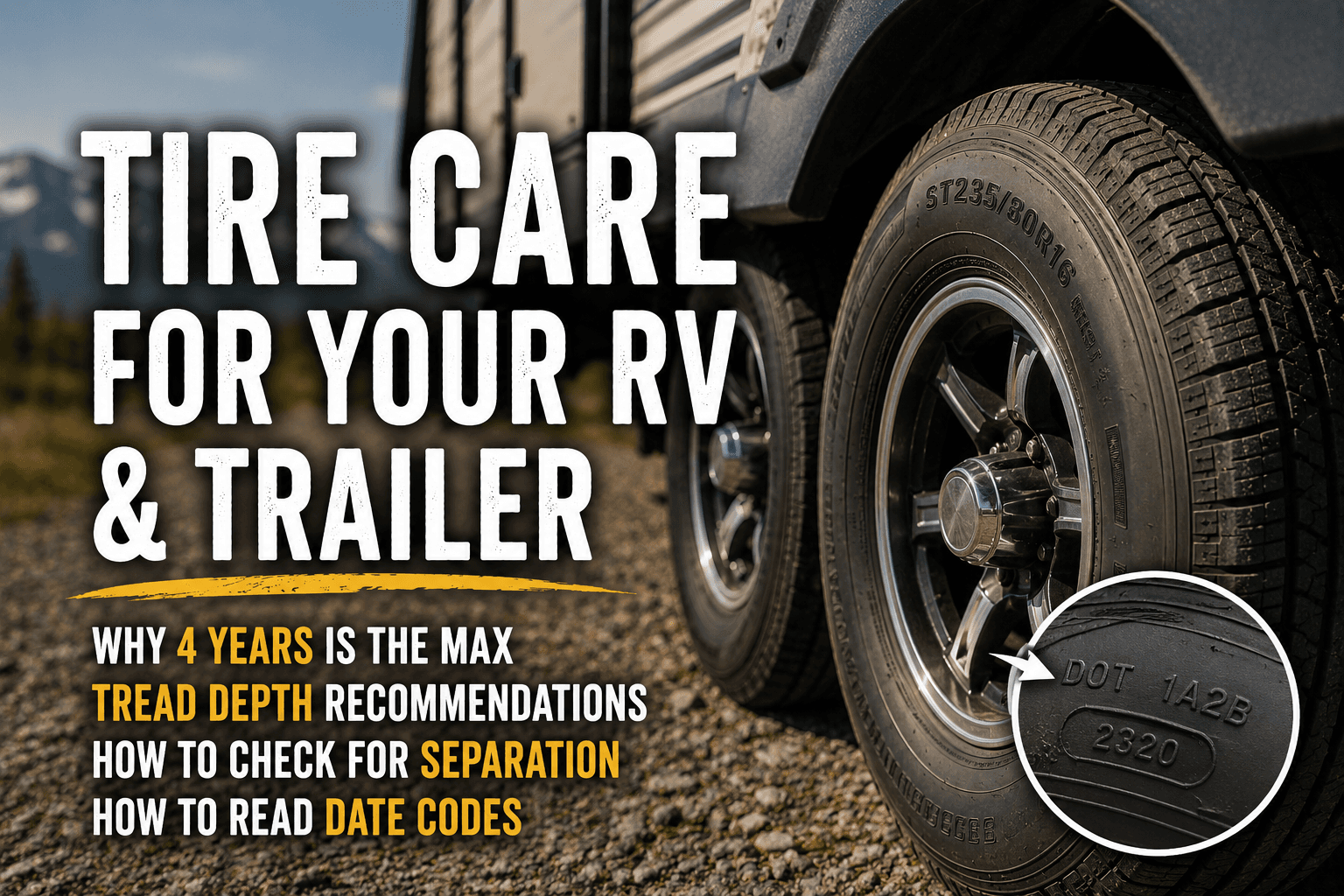
My personal recommendation is no more than four years, even if the tread still looks great.
That’s a little more conservative than some manufacturers, but when you’re pulling several tons down the highway, I’d rather replace tires a little early than deal with a blowout that damages the trailer.
The sun, heat, UV exposure, ozone, and long periods of sitting all cause rubber to deteriorate from the inside out.
A tire can look almost brand new while becoming unsafe.
Check Your Tire Tread Depth
Even though age is usually the bigger concern for RV tires, tread still matters.
As a general rule:
- 6/32" or more – Great condition
- 5/32" – Start planning for replacement
- 4/32" – Replace immediately
Uneven tread wear can also point to other issues such as:
- Improper inflation
- Suspension problems
- Bent axles
- Alignment issues
- Overloading
If one tire is wearing noticeably faster than the others, don’t ignore it.
Look for Tire Separation
One of the most dangerous things that can happen to a trailer tire is belt separation.
Sometimes it’s obvious.
Other times the tire looks almost normal until it fails.
Before every trip, slowly inspect each tire and look for:
- Bulges in the sidewall
- Raised spots in the tread
- Wavy tread patterns
- Cracks around the sidewall
- Areas where the tread appears to be lifting
If a tire doesn’t look perfectly round while rolling, that’s another warning sign.
When in doubt, replace it.
Learn How to Read the DOT Date Code
Every tire has a DOT code molded into one sidewall.
The last four numbers tell you exactly when the tire was manufactured.
For example:
2322
- 23 = 23rd week
- 22 = Year 2022
That means the tire was built during the 23rd week of 2022.
This is the date that matters, not the date you bought the tire.
I’ve seen people purchase "new" tires that had already been sitting in a warehouse for over a year.
Always check before installation.
Keep Them Properly Inflated
Incorrect tire pressure is one of the biggest causes of trailer tire failures.
Check pressures when the tires are cold before every travel day.
Don’t rely on how the tire "looks."
A tire can be dangerously low and still appear normal.
Use the inflation pressure recommended by the tire manufacturer for the load you’re carrying.
Don’t Forget the Spare
It’s amazing how many RV owners carefully inspect all four tires and completely forget the spare.
Your spare is aging too.
If it’s the same age as the rest of your tires, it should be replaced on the same schedule.
The last thing you want is to install a 6-year-old spare after a blowout.
Materials & Tools You’ll Need:
- Tire pressure gauge
- Air compressor
- Tire tread depth gauge
- Flashlight
- Tire valve caps
- Tire pressure monitoring system (TPMS)
- Wheel chocks
- Torque wrench (for checking lug nuts after wheel removal)
Final Thoughts
Your trailer tires are one of the most overlooked safety items on an RV.
A five-minute inspection before every trip can help prevent thousands of dollars in damage and, more importantly, keep your family safe on the road.
Even if your tread looks excellent, don’t forget that rubber continues to age every single day.
For me, replacing trailer tires around the four-year mark is inexpensive insurance compared to dealing with a catastrophic blowout hundreds of miles from home.
Take a few extra minutes before your next trip.
Your RV and everyone traveling with you will thank you for it.